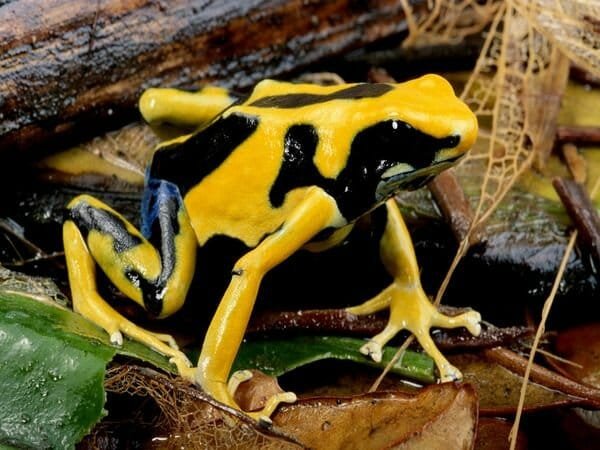
Poison dart frog is the common name of a group of frogs in the family Dendrobatidae which are native to Central and South America. Unlike most frogs, these species are active during the day and often exhibit brightly-colored bodies. Although all wild dendrobatids are at least somewhat toxic, levels of toxicity vary considerably from one species to the next and from one population to another. Many species are critically endangered. These amphibians are often called “dart frogs” due to indigenous Amerindians’ use of their toxic secretions to poison the tips of blowdarts. In fact, of over 175 species, only three have been documented as being used for this purpose, and none come from the Dendrobates genus, which is most characterized by the brilliant color and complex patterns of its members.
Dyeing Poison Dart Frog

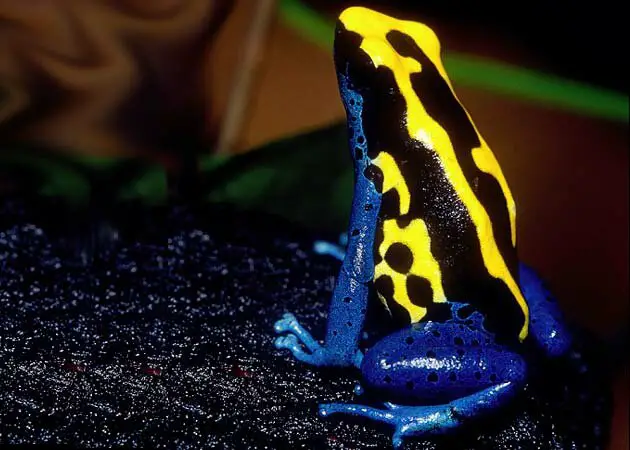
Dendrobates tinctorius, also known by the common name dyeing dart frog, is a species of poison dart frog. It is the largest species, reaching lengths of 50 millimetres. This species is distributed throughout the eastern portion of the Guiana Shield, including parts of Guyana, Suriname, Brazil, and nearly all of French Guiana.
Blue Poison Dart Frog
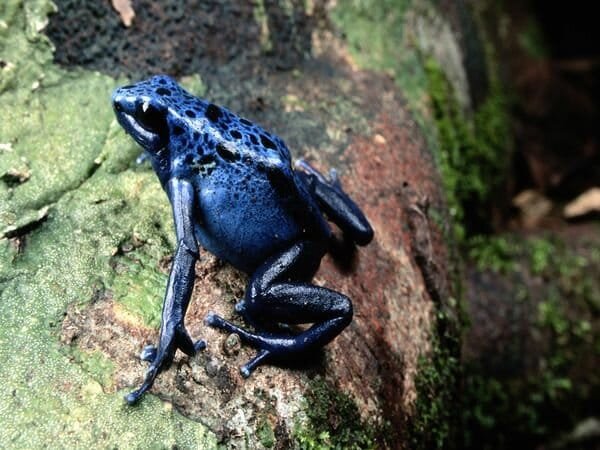
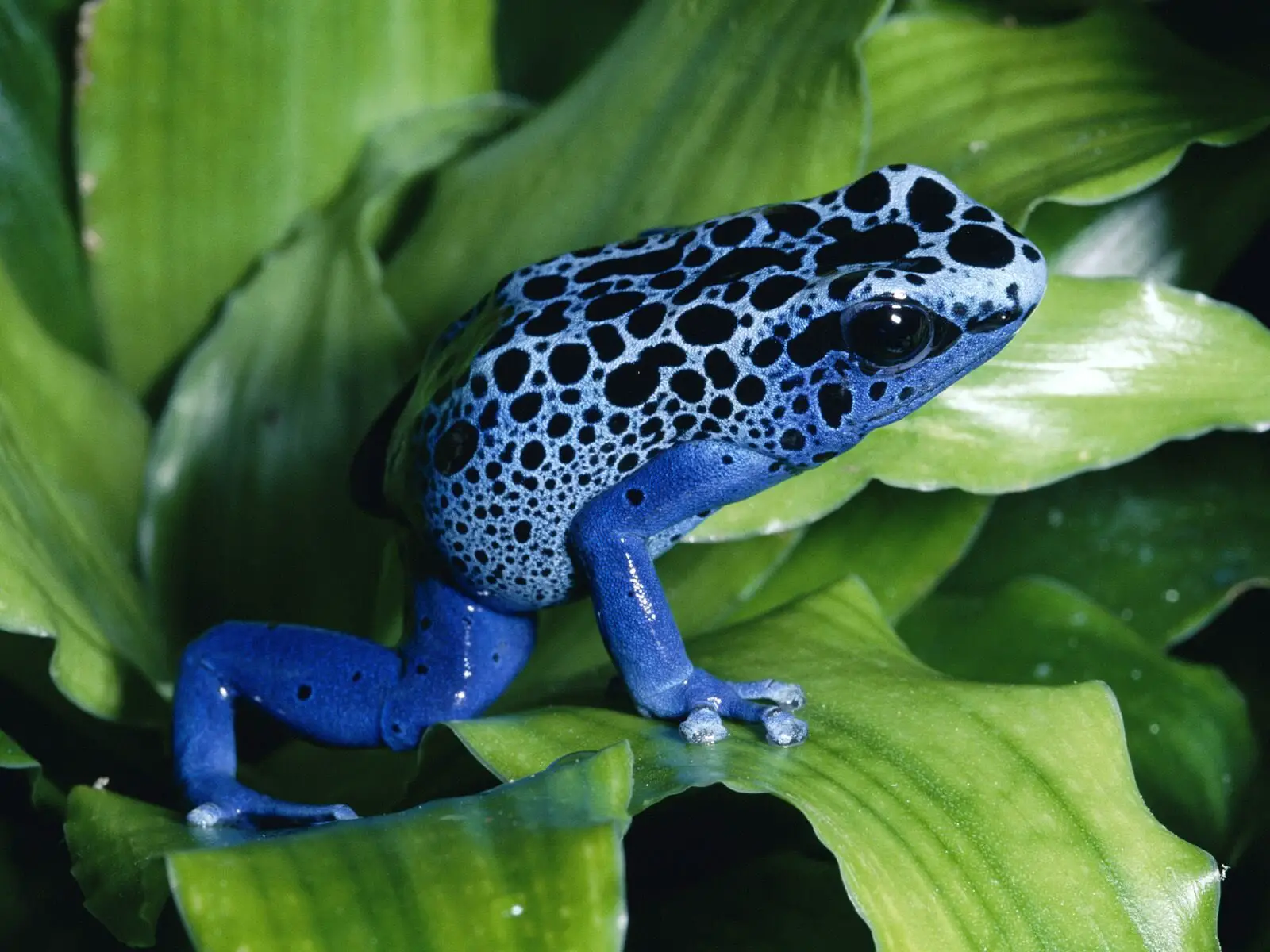
Dendrobates azureus is a type of poison dart frog found in the forests surrounded by the Sipaliwini savannah, which is located in southern Suriname and Brazil. Dendrobates azureus is widely known as the Blue Poison Dart Frog or by its Tirio Indian name, Okopipi. It takes its species name from the fact that it is colored azure.
Strawberry Poison Dart Frog
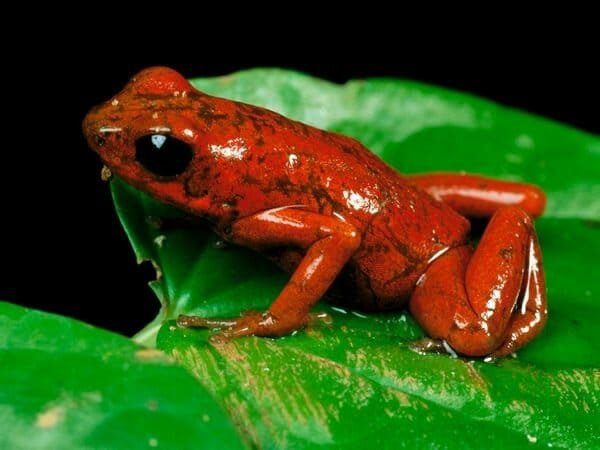

The strawberry poison frog or strawberry poison-dart frog, is a species of poison dart frog found in Central America. It is common throughout its range, which extends from eastern central Nicaragua through Costa Rica and northwestern Panama. The species is often found in humid lowlands and premontane forest, but large populations are also found in disturbed areas such as plantations. The strawberry poison frog is perhaps most famous for its widespread variation in coloration, comprising approximately 15-30 color morphs, most of which are presumed to be true-breeding.
Golden Poison Dart Frog

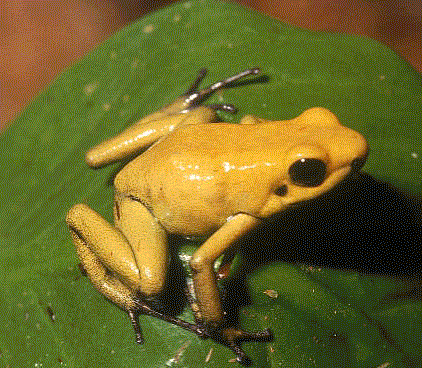
Phyllobates terribilis, the Golden Poison Frog or the Golden Dart Frog, is a poison dart frog endemic to the Pacific coast of Colombia. This amphibian of the dendrobatidae family is currently considered the most poisonous vertebrate worldwide. The optimal habitat of P. terribilis is the rainforest with high rain rates, altitude between 100–200 m, temperature of at least 26 °C, and relative humidity of 80–90%.